Saint Kitts and Nevis has announced plans to wind down its Citizenship by Investment (CBI) Program, marking a significant development for one of the Caribbean's longest-established investment migration initiatives.
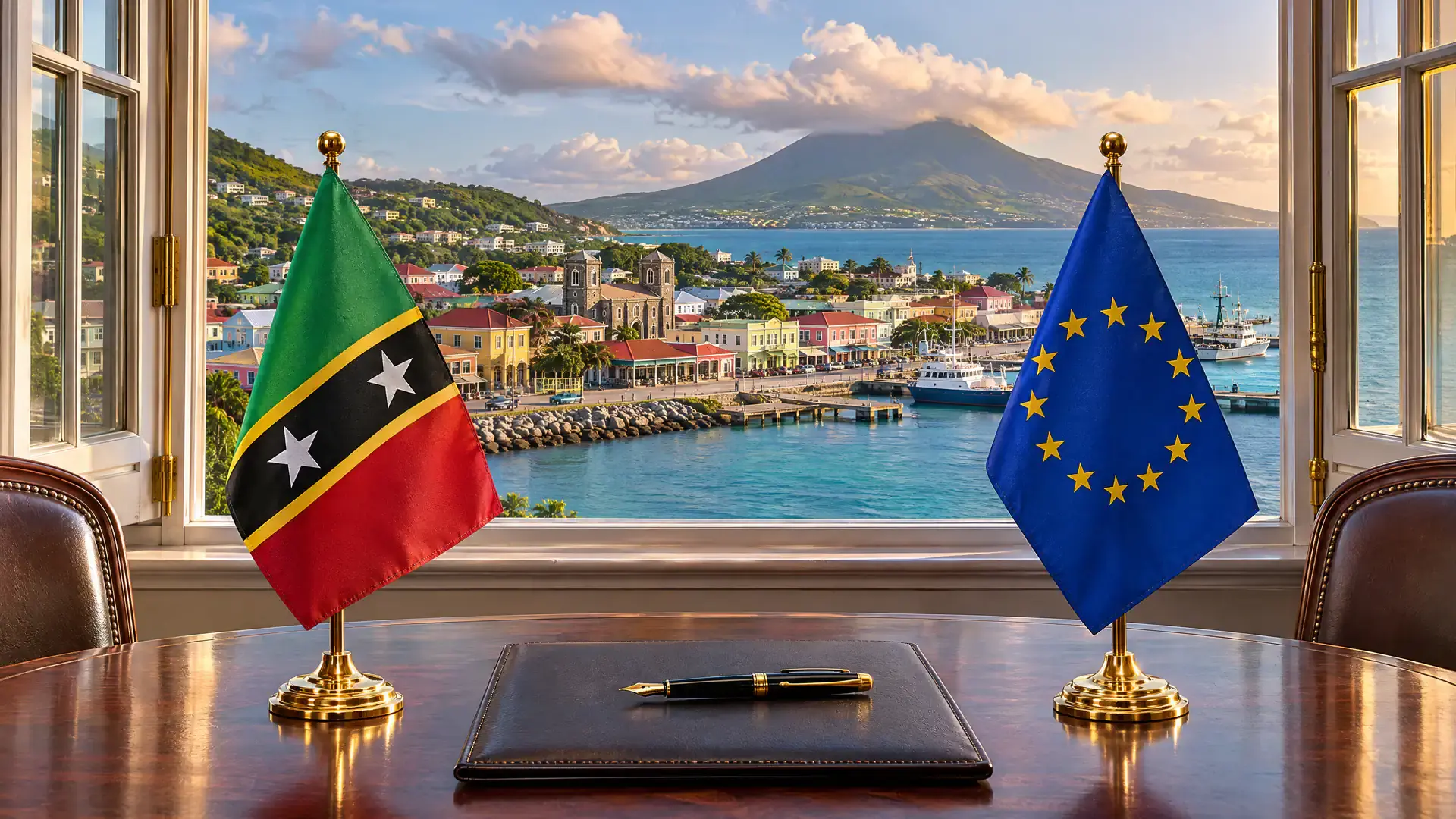
Prime Minister Terrance Drew confirmed the decision during a national address on November 13, 2026, explaining that the government has formally communicated its position to the European Union (EU).
However, the announcement does not mean that the program has closed immediately.
Saint Kitts and Nevis continues to accept citizenship by investment applications while the government negotiates a transition timeline and final application deadline with European authorities.
The decision is intended to protect the federation's visa-free travel arrangements, maintain access to international financial systems, and support a responsible transition toward alternative sources of government revenue.
Saint Kitts and Nevis Citizenship by Investment Program Remains Open
Despite the government's decision to begin winding down the program, the Citizenship by Investment Unit (CIU) will continue accepting and processing applications.
Prime Minister Drew confirmed that the program would remain operational until a final application deadline is agreed with the European Union.
All applications will continue to be assessed under the country's established regulatory standards.
The government has also ruled out special discounts or accelerated processing arrangements ahead of the eventual closure.
Drew emphasized that there would be no reduction in the program's existing standards during the transition.
This clarification is particularly important for prospective investors who may be concerned about the immediate availability of Saint Kitts and Nevis citizenship by investment.
Why Is Saint Kitts and Nevis Ending Its Citizenship by Investment Program?
The government's decision follows discussions with the European Union and other international partners concerning the future of Caribbean citizenship by investment programs.
A central concern is the potential impact of continued disagreement over investor citizenship schemes on visa-free access to the Schengen Area.
Prime Minister Drew referred to Regulation (EU) 2025/2441, which entered into force on December 30, 2025.
Under the regulation, the operation of an investor citizenship program can be considered grounds for suspending visa-free travel arrangements.
According to Drew, the European Commission contacted Saint Kitts and Nevis in June 2026 and invited the federation to wind down its CBI Program over a transitional period.
The government has therefore chosen to negotiate an orderly closure rather than risk potential consequences for international travel and financial relationships.
Protecting Schengen Visa-Free Travel
Maintaining visa-free access to the Schengen Area is one of the government's main priorities.
Saint Kitts and Nevis citizens currently benefit from visa-free travel arrangements for short visits to participating European countries.
The government is concerned that continuing to operate the Citizenship by Investment Program without an agreement with the European Union could place these arrangements at risk.
The decision to negotiate a wind-down is therefore intended to preserve international mobility benefits while addressing European regulatory concerns.
However, the final transition timeline and application deadline have not yet been established.
International Banking Relationships Are Another Major Concern
Beyond visa-free travel, Prime Minister Drew highlighted the importance of protecting Saint Kitts and Nevis's international banking relationships.
The government is concerned that continued disagreements over the CBI Program could result in greater scrutiny from international financial institutions.
In particular, Drew warned about potential risks to correspondent banking relationships.
These relationships allow local banks to maintain accounts with foreign financial institutions and facilitate international transactions.
Disruptions could affect:
- Cross-border payments and international transfers.
- Remittances.
- Credit card transactions.
- Payments for imported goods.
- Businesses that depend on international financial services.
The Prime Minister indicated that protecting the country's access to the international financial system is a central consideration behind the decision.
What Happens to Existing Saint Kitts and Nevis Citizens?
Prime Minister Drew has reassured individuals who already hold Saint Kitts and Nevis citizenship that the government's decision will not affect their legal citizenship status.
Existing citizens, whether living in the federation or abroad, will retain their established rights.
The announcement therefore concerns the future operation of the Citizenship by Investment Program rather than the cancellation of citizenship previously granted to qualifying applicants.
The government has also indicated that existing travel arrangements remain unchanged at this stage.
What Happens to Current Citizenship by Investment Applicants?
For prospective applicants and individuals with applications already under review, the most important clarification is that the program remains operational.
The government has not announced a final application deadline.
Until that deadline is negotiated with the European Union, the CIU will continue accepting applications under the existing regulatory framework.
The Prime Minister has also ruled out discounted investment requirements or accelerated application processing before closure.
In 2025, the government revoked 13 citizenships and blacklisted two marketing firms following allegations involving the promotion of citizenship below statutory minimum investment requirements.
These enforcement measures reflect the government's emphasis on maintaining regulatory standards.
Biometric Enrollment Requirements for Existing Applicants
Separately from the planned closure, certain Saint Kitts and Nevis CBI applicants must comply with biometric enrollment requirements.
According to the CIU, applicants whose applications predate April 14, 2026, must complete biometric enrollment by July 31, 2027.
The unit has indicated that failure to comply would result in Saint Kitts and Nevis no longer accepting their CBI passports for international travel.
Affected individuals should therefore ensure they understand and meet the applicable biometric requirements.
Saint Kitts and Nevis CBI Program Generated EC$6.5 Billion
The Citizenship by Investment Program has played a major role in Saint Kitts and Nevis's economic development.
The program traces its origins to the Citizenship Act of 1984, making it one of the world's longest-established citizenship by investment initiatives.
According to figures presented by Prime Minister Drew, the program generated approximately EC$6.5 billion (US$2.4 billion) between 2008 and 2025.
This represented approximately half of the cash collected by the federal government during that period.
The revenue has contributed to several areas of national development, including:
- Roads and infrastructure.
- Schools and educational facilities.
- Affordable housing.
- Tourism developments.
- Economic recovery following the COVID-19 pandemic.
Projects supported by citizenship investment revenue include the Park Hyatt hotel and the development of the new Basseterre High School and Creative Arts Center.
However, the government has acknowledged that long-term dependence on citizenship investment revenue creates financial risks.
Saint Kitts and Nevis Reduces Its Dependence on CBI Revenue
Prime Minister Drew has emphasized that the country is already working to reduce its reliance on citizenship by investment.
According to the government's figures, CBI revenue represented as much as 70% of government revenue in 2022.
By 2026, that contribution had declined to less than 20%.
The government has attributed this reduction to ongoing economic diversification efforts.
Its objective is to reduce the program's contribution to the national budget to below 10% in 2027.
IMF Highlights Financial Challenges as CBI Revenue Declines
The International Monetary Fund's May 2026 assessment highlighted several fiscal challenges associated with declining citizenship investment revenue.
According to the IMF:
| Economic Indicator | Reported Figure |
|---|---|
| Fiscal deficit in 2025 | 11.7% of GDP |
| Public debt in 2025 | 58.4% of GDP |
| CBI fees as a share of GDP in 2022 | 25.8% |
| CBI fees as a share of GDP in 2025 | 5.3% |
| Government deposits in 2021 | 31% of GDP |
| Projected government deposits in 2026 | 3% of GDP |
The figures illustrate the financial pressures facing Saint Kitts and Nevis as it moves toward a future with reduced citizenship investment revenue.
Prime Minister Drew has acknowledged the need for more careful public spending management.
However, he has ruled out tax increases and indicated that the government's approach will focus on expanding economic activity and attracting new investment.
Government Plans to Accelerate Economic Diversification
As Saint Kitts and Nevis prepares to transition away from citizenship by investment, the government intends to accelerate its Sustainable Island State Agenda.
The strategy focuses on developing alternative sources of economic growth through:
- Foreign direct investment.
- Renewable energy.
- Digital transformation.
- Tourism development.
- Creative industries.
- Infrastructure investment.
Several projects are being considered, including geothermal energy development on Nevis and Saint Kitts, improved electricity connectivity between the islands, regional maritime connections, and expanded fiber-optic infrastructure.
The government has also discussed potential support from the European Commission through the EU's Global Gateway Strategy.
Another component of the country's economic transition is the Sovereign Wealth and Resilience Fund, established through legislation in 2026 to strengthen financial resilience against future economic shocks.
How Are Other Caribbean Citizenship by Investment Countries Responding?
Saint Kitts and Nevis is not the only Caribbean country facing pressure from the European Union regarding citizenship by investment.
Other countries are considering different approaches.
Antigua and Barbuda: The government has proposed ending its Citizenship by Investment Program by December 2030, conditional on European financial assistance.
Saint Lucia: Prime Minister Philip J. Pierre confirmed on November 9 that his government had submitted a written response to the European Commission, without publicly disclosing its contents.
Grenada: Prime Minister Dickon Mitchell has expressed a preference for maintaining both the country's Citizenship by Investment Program and visa-free access to the Schengen Area.
Dominica: The government pledged to communicate further with the European Union by November 12, although the article does not confirm whether a formal response was submitted.
These developments demonstrate that Caribbean governments are evaluating different approaches to balancing investment migration revenue with international regulatory requirements.
Is Saint Kitts and Nevis Citizenship by Investment Still Available in 2026?
Yes. As of the November 13, 2026 announcement, the Saint Kitts and Nevis Citizenship by Investment Program remains open.
Although the government has announced its intention to wind down the program, applications continue to be accepted until a final deadline is agreed.
| Program Detail | Current Status |
|---|---|
| Citizenship by Investment Program | Operational during transition |
| New applications | Still accepted |
| Final application deadline | Not announced |
| Government decision | Begin winding down the program |
| EU transition agreement | Pending |
| Existing citizenship holders | Legal status remains unchanged |
| Discounts or accelerated processing | Ruled out by the government |
| CIU operations | Continuing during transition |
Prospective investors should monitor official announcements concerning the final application deadline and any changes to the transition arrangements.
Looking Ahead: The Future of Saint Kitts and Nevis Citizenship by Investment
Saint Kitts and Nevis's decision to wind down its Citizenship by Investment Program represents a significant development in the Caribbean investment migration sector.
The government is seeking to protect visa-free access to Europe, maintain international banking relationships, and accelerate economic diversification.
However, the program has not closed, and applications continue to be accepted under the existing regulatory framework.
The next major development will be the outcome of negotiations with the European Union concerning the transition period and final application deadline.
Until an agreement is reached, Saint Kitts and Nevis Citizenship by Investment remains available to qualifying applicants.